Search Close Search
Page Menu

Program Overview

 
The UMass Chan Medical School Medical Scientist Training Program (MSTP) spans the entire spectrum of health-related research, from laboratory-based foundational research to clinical and translational work, and also studies of health and disease in populations.

MD-PhD students at ceremonyOur MSTP students are integral parts of the internationally recognized centers of research excellence at UMass Chan, including in RNA biology, RNA therapeutics, innate immunity and inflammation, neurobiology, cancer biology, cell and molecular biology, digital medicine, and quantitative health sciences.
 
Faculty on our campus who have trained MD-PhD students include two Nobel laureates (including the 2024 winner of the Nobel Prize in Medicine or Physiology), a Lasker Award and Breakthrough Prize winner, eight members of the National Academy of Sciences, five National Academy of Medicine Members, seven Howard Hughes Medical Institute Investigators, eight American Academy of Microbiology Fellows, 15 members of the American Society of Clinical Investigation (including Dr. Pukkila-Worley, our Program Director), and one Royal Society member (UK). Most importantly, the collegiality and openness of our faculty promotes synergy and fosters transdisciplinary research. 
 

Program Highlights

  • Choice of Basic Biomedical Sciences or Population Health Sciences research paths
  • Integrated curriculum with multiple MSTP-specific courses
  • Highly flexible program, tailored to individual student’s needs and interests
  • Pool of over 350 thesis advisors
  • Structured longitudinal mentorship by physician-scientists through entire program
  • Structured Individual Development Plan (IDP) serving as a tailored compass to guide the student’s progress, and which is reviewed and updated periodically by student and mentor(s) 
  • Extensive career guidance
  • Monthly seminars and workshops by and for students
  • Annual program research retreat
  • Physician Scientist Forums attended by MSTP students at all levels of training 
  • Grant writing and submission as outcome of PhD Qualifying Examination
  • Strong formal student leadership
  • Strong student government and structured peer mentoring 

Graduate Research Program Choices for PhD Study

MSTP students select a thesis mentor from a broad range of faculty and disciplines across two research paths:

  1. Basic Biomedical Sciences (BBS). Although the graduate school has multiple programs, such as Cancer Biology or Neuroscience, it also has an Interdisciplinary Graduate Program (IGP), which we encourage most students interested in the BBS path to follow.  IGP is highly flexible and allows tailoring to our MD-PhD students' needs. Formal course requirements for MSTP students consist of a series of MDP courses and IGP students may also participate in advanced courses, journal clubs, and other activities offered by the Morningside Graduate School of Biomedical Sciences programs. A multitude of elective courses are also available. Selections are customized to each student and are chosen after discussion between the student and their thesis advisor. 
     
  2. Population Health Sciences (PHS). MDP PHS students without an MPH or requisite graduate level courses in biostatistics and epidemiology first take CTS605A which provides a fundamental introduction to research design and analysis. Additional PHS courses are offered to all graduate students, as long as the prerequisites required are met. Alternatively, an MDP student may learn this material through individualized tutorials with their thesis advisor. 

Our Students 

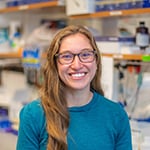
Jillian Belgrad - Basic Biomedical Science Path

Jillian's Story

  • Summer pre-MS1: Lab rotation with Dr. Paul GreerJillian Belgrad
  • Summer pre-MS1: Lab rotation with Dr. Dori Schafer
  • MS1: Medical School anatomy and physiology, biochemistry; doctoring and clinical skills, Developing Solutions to Research Problems (MDP specific course)
  • Summer pre-MS2: Lab rotation with Dr. Anastasia Khvorova
  • MS2: Pathology of disease curriculum, doctoring and clinical skills, continued research with Khvorova lab, Passed USMLE Step 1
  • Post-MS2 summer: Internal Medicine and Neurology MS3 core clerkships
  • August 2021: Started PhD in Anastasia Khvorova lab on RNA-based therapeutics for neurodegenerative diseases, focusing on Huntington’s disease
  • Fall GS1: Took Professionalism and Research Conduct (PARC), Preparation for Qualifying Exam, RNA Biology, Annual Regulatory Training, attended departmental seminars and journal clubs 
  • Passed PhD Qualifying exam, Spring GS1: March 2022
  • GS2: Applied August 2022 cycle of F31, awarded April 2023
  • GS2-GS4: Conducted PhD research. Shared research progress and collaborated with colleagues at 10+ conferences including Gordan Research CAG Triplet Repeat Conference, Cold Spring Harbor Neurodegenerative Diseases Conference, and Annual Meetings of the Hereditary Disease Foundation, Oligonucleotide Therapeutics Society, N-of-1 Collaborative, Cure Huntington’s Disease Initiative, American Society of Cell and Gene Therapy, and Child Neurology Society
  • Engaged in 15 hours of clinical experiences per semester during the PhD, primarily through shifts in the Adult ED under the mentorship of an MD/PhD EM physician
  • Completed and defended PhD February 2025
  • Published 13 papers and preprints during PhD including 8 first authors, with 5 oral presentations and numerous poster presentations
  • Returned to medical school March 2025: Completed Ob/Gyn, Pediatrics, Surgery, Psychiatry MS3 core clerkships
  • MS4: Took Medicine Acting Internship, Peds Emergency Medicine, Neonatal ICU, and Pediatrics Neurology fourth year electives
  • Longitudinal involvements: Marie’s Mission Worcester Diaper Bank, MD/PhD student council, Medical Education curriculum and development committees
  • Awards: Zelda Haizak Scholarship in Cell Biology, 2022; Student Star Award 2022; Gold Humanism Honor Society 2022; NINDS F31, 2023, Program Service and Student Contributions, 2023; Jonathan Epstein Scholar, 2024; Oligonucleotide Therapeutics Society Alan M. Gewirtz Memorial Graduate Student Award, 2024, Student Community Service Leadership Award, 2025

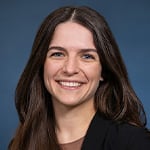
Claire Branley - Population Health Sciences Path

Claire's StoryClaire Branley

  • Summer pre-MS1 (2021): I came to UMass interested in a broad range of public health topics related to nutrition. I was particularly interested in how to make a healthy diet, particularly fresh fruits and vegetables, more readily accessible and affordable. I did my first rotation in the lab of Dr. Stephenie Lemon, director of the Prevention Research Center (PRC), and was immediately hooked!
  • MS1: Got involved in the UMass Community Garden, the Akwaaba Free Clinic, and the Worcester Refugee Assistance Project (WRAP)
  • Summer pre-MS2 (2022): I continued to rotate with Dr. Lemon and the PRC. We partnered with local public health departments and non-profits to host listening sessions for the White House Conference on Hunger, Nutrition, and Health, which our US House Representative Jim McGovern was a major champion of.
  • Post-MS2 summer (2023): I rotated through the previous curriculum’s “Care of Families” block (Family Medicine, Pediatrics, and Psychiatry). I came to UMass planning on family medicine or internal medicine and unexpectedly fell in love with Pediatrics!
  • Fall 2023-2025: Transitioned to full-time PhD work. I decided to focus my thesis on barriers to enrollment in the Special Supplemental Nutrition Program for Women, Infants, and Children (WIC). I partnered with Children's Health Watch, which collects data on social determinants of health (SDOH) and child health in five pediatric emergency departments across the country
    • I also was able to assist with a city-wide survey and qualitative research for Worcester’s first ever Community Food Assessment.
    • I did work with UMass’ Child Health Equity Center to evaluate their SDOH screening practices in the pediatrics clinic and how that mirrored referrals to Fresh Connect, a produce prescription program recently started across the state
    • I presented at the Pediatric Academic Societies Conference (PAS) in both 2025 and 2026 which was a fantastic opportunity to connect with pediatricians and researchers across the country! I also attended the Dissemination and Implementation Science Conference to present a poster in 2023. 
  • Fall 2025: Defended my thesis and returned to MS3!
  • Spring-Summer 2026: I took Step 2, had a little vacation, got married, and started my fourth year of medical school
  • Fall 2026: I just submitted my residency application to pediatrics, including a few PSTP programs
  • Awards: GSBS Dean’s Award for Community Service, GHHS, AOA