


Student Life
All UMass Chan Students
Academic Support Services
| Academic counseling | Tutoring | Test-taking |
Our goal is to help all learners in the T.H. Chan School of Medicine, Tan Chingfen Graduate School of Nursing, Morningside Graduate School of Biomedical Sciences, and Graduate Medical Education achieve the most comprehensive and meaningful educational experience possible. We encourage you to access the resources of the Center for Academic Achievement.
The CAA is made up of the Center for Academic Achievement, as well as Academic Enrichment Programs which work together in order to provide comprehensive services to students, residents, and fellows. Students seen for academic enrichment may be encouraged to receive clinical enrichment services and vice versa.
Clinical
Clinical students, residents, and fellows should contact Tracy Kedian, or Lisa Shay for the following concerns:
- Clinical skills related to working on the wards
- Clinical interviewing
- Clinical problem solving and decision making
- Patient communication
- Patient oral presentation
- Patient notes
- Performance on OSCEs
- CCE shelf exam performance
- Step 2 CS, Step 2 CK, Step 3, COMLEX, NP, In-Training exams, or Board Certification exams- if concerns relate to clinical problem solving or fund of knowledge
- Clinical Skills Electives
- Independent Study Courses
- Study skills as related to clinical work
Pre-Clinical
Pre-clinical students should contact Christine Woolf, Director of Academic Enrichment Programs for the following concerns:
- Performance in courses
- Test taking skills
- Study skills
- Time management
- Error analysis of exams
- Memorization
- Organization
- Reading comprehension
- Note taking
- Step 1, NCLEX, and MCAT preparation
- Step 2 CK, Step 2 CS, Step 3, COMLEX, NP exams, In-Service Training exams, and Board Certification exams- if concerns relate to developing a study schedule or developing more efficient and effective ways to study
How we operate
We generally begin by meeting with the client in order to develop a needs assessment which lays the groundwork for the collaborative development of an individualized educational plan. We decide together how often to meet and how to proceed. Sometimes a few sessions is all that is needed and at other times a one month Clinical Skills Elective is chosen.
For more information about the Center for Academic Achievement, please go here.
Appropriate Treatment of Learners
The UMass Chan Medical School (“UMass Chan”) is committed to providing a supportive and respectful learning environment that fosters mutual trust and understanding between learners and the educational community. Accordingly, UMass Chan has developed an Appropriate Treatment of Learners (“ATL”) policy to address concerns regarding the inappropriate treatment of learners by a member of the educational community. When the ATL standards are upheld, the educational environment supports optimal teaching, learning and professional development of learners. The Diversity and Inclusion Office (DIO) is responsible for the ongoing oversight and periodic review of this policy.
The ATL policy defines some behaviors that represent inappropriate treatment of learners. It also describes the procedure for reporting complaints and the follow-up of such allegations. UMass Chan is committed to conducting investigations thoroughly, promptly and impartially. All students should expect to be treated with respect, and to learn and work in a safe environment. All individuals who interact with students are expected to behave in accordance with the ATL policy, which applies to all UMass Chan faculty, staff, residents, fellows, nurses, administrators and others who interact with learners.
Inappropriate treatment of learners occurs when behavior by a member of the learning community shows disrespect for the dignity of learners such that it interferes with their learning process. Examples of such behaviors include, but are not limited, to the following:
- Humiliation of learners
- Verbal attacks towards learners
- Inappropriate anger or harsh language when addressing a learner
- Lack of communication with a learner
- Requiring a learner to perform tasks that belittle the learner
- Requiring a learner to perform personal services, e.g. babysitting, errands, shopping, etc.
- Insulting conduct to a learner
- Disregard for learner safety
The ATL policy does not address sexual harassment complaints, violence/hostility in the workplace, or discrimination. The reporting and investigation of these complaints are addressed in other policies, including the Title IX Incident policy, Violence and Hostility in the Workplace policy, and the Discrimination Complaint Policy and Procedure, respectively. Each of these policies can be found on the DIO website.
Learners who believe they have been subject to inappropriate treatment in the learning community are responsible for reporting their complaint to the DIO as soon as possible. In addition, any member of the learning community who becomes aware of inappropriate treatment of a learner is strongly encouraged to report the issue to the DIO for further investigation.
For more information, including definitions, policies and procedures for reporting suspected inappropriate treatment, students are encouraged to contact the Diversity and Inclusion Office (DIO). Confidential consultation and assistance with reporting are also available in the Office of Student Affairs.
(revised 03/2017)
Clery Act
Our campus complies with the federal Clery Act. Prior to October 1st of each year, our campus publishes the Annual Security Report, which contains campus safety information. The most recent report can be found on the following web page:
View Clery Act
Title IX
It is the policy of the UMass Chan Medical School (“UMass Chan”) [the University of Massachusetts Worcester (“UMW”)] to comply with Title IX of the Education Amendments of 1972 (“Title IX”), 20 U.S.C. §§ 1681 et seq., and its implementing regulations, 34 C.F.R. Part 106, which prohibit discrimination on the basis of sex in education programs or activities operated by recipients of Federal financial assistance. Sexual harassment of students, which includes acts of sexual violence, is a form of sex discrimination prohibited by Title IX. Sexual violence refers to physical sexual acts perpetrated against a person’s will or where a person is incapable of giving consent due to the victim’s use of drugs or alcohol or due to an intellectual or other disability. A number of acts may fall into the category of sexual violence, including rape, sexual assault, sexual battery, non-consensual video or audio taping of sexual activity, domestic violence, dating violence, stalking incidents and sexual coercion. All such acts of sexual violence are forms of sexual harassment covered under Title IX.
The language, terms and requirements of this Policy supersede and supplant any inconsistent or conflicting language in any other UMass Chan policy. The UMass Chan employee to whom claims shall be reported under this Policy and who shall be responsible for administering this Policy is UMass Chan’s Title IX Coordinator – as designated by UMass Chan's Provost.
CARE website: Campus Assault, Resource, and Education site (for sex discrimination and violence)
You can contact the Diversity and Inclusion Office by calling 508-856-2179.
Morningside Graduate School of Biomedical Sciences Students
Area Housing
The Morningside Graduate School of Biomedical Sciences does not provide student housing.
Employment Opportunities
No opportunities available at this time.
Graduate Achievements
Evidence of Student Success:
Morningside Graduate School of Biomedical Sciences Student Research Accomplishments
The Morningside Graduate School of Biomedical Sciences at UMass Chan Medical School comprises approximately 400 students and 350 research faculty who share a passion for biomedical research. Their work is producing exciting advances in existing and emergent areas of biology and medicine and is contributing to the explosive development of new technologies used to probe the most challenging problems in biomedicine. Our students' research spans the study of single molecules in isolation through population genomics and outcomes, is yielding spectacular insights and, in some cases, has been translated into novel medicines and therapies, improving the lives of citizens of the Commonwealth of Massachusetts and beyond.
Morningside Graduate School of Biomedical Sciences Student Career Outcomes
Our graduating students leave the Morningside Graduate School of Biomedical Sciences and enter into a wide variety of positions; including Industry Research, Academia, Healthcare Management, and Regulatory Affairs. Review the data to explore the wide-variety of opportunities available:
Fellowships
36 of our current Morningside Graduate School of Biomedical Sciences students have been award fellowships from the NIH, NSF, and other private sources.
Publications
Student publications data reflect publications by students for up to 2 years post-graduation, if published with their thesis advisor. Current student/mentor publication averages for the three most recent years (defined as academic year of graduation plus two years post-graduation) are: 2020 = 4.4 publications, 2019 = 4.2 publications, 2018 = 4.1 publications. Scholarly output for Morningside Graduate School of Biomedical Sciences alumni for the five most recent years are: 2020 = 288, 2019 = 240, 2018 = 265, 2017 = 232, 2016 = 240
View graph
Honor Code
PDF: Honor Code
Non Academic Opportunities
Graduate Student Body Committee (GSBC)
The Graduate Student Body Committee (GSBC) is a group of elected students who serve as the voice of graduate students on campus. By serving on committees with faculty, we represent student interests and help in decision-making. An important goal of the GSBC is to keep graduate students informed about new policies regarding their thesis work. We gain insight from students about changes they would like to see happen at UMass Chan Medical School and work hard to implement these changes. One of our major goals is to further relationships between graduate students on campus, in addition to interprofessional relationships with both the medical and nursing students. The GSBC encourages fellow colleagues in their studies, hosting events for first-year students during their core coursework. We offer social events throughout the year to foster friendships and support groups and hold local volunteer activities such as Working for Worcester and Habitat for Humanity. We also partner with the Career and Professional Development group and host events for students that help prepare them for their career path of interest.
President Co-Chairs: Joe Magrino, Heather Learnard
Staff Advisor: Daryl Bosco, PhD
More information
Morningside Graduate School of Biomedical Sciences Cares
Morningside Graduate School of Biomedical Sciences Cares is a community service organization with elected chairs from the Morningside Graduate School of Biomedical Sciences, but seeking involvement from all three schools.
Student Chairs: Brent Horowitz, Melanie Walker
Industry Exploration (IndEx) Program
The primary objective of the group is to provide both graduate students and postdocs an opportunity to explore PhD-level careers in the biotechnology and pharmaceutical industries. We organize site visits in the Massachusetts and New England area to allow trainees to observe company cultures, learn about the structure and function of industry research and enhance their knowledge of careers in industry. The program also provides an opportunity to interact directly and network with industry professionals and obtain valuable career guidance.
Co-chairs: Cansu Colpan and Socheata Ly
Faculty/Staff Advisors: Cynthia Fuhrmann, PhD
More Information
International Society for Pharmacoepidemiology (ISPE) Student Chapter
This student chapter will meet regularly to discuss pharmacoepidemiology methods, share research in progress, and provide peer review.
Student Representative: Matthew Alcusky
Faculty co-advisors: Kate Lapane PhD, Christine Ulbricht PhD, MPH
MassTERi Entrepreneurship Club (eClub)
The Entrepreneurship Club (eClub) is a student and post-doctoral fellow-led initiative that was launched in 2014 as one of the key elements to the MassTERi program.
The MassTERi eClub has three goals: 1) Develop a community of entrepreneurs at UMass Chan that includes students, post-docs, staff, and faculty; 2) Inspire and foster an entrepreneurial culture at UMass Chan in both basic and translational research; 3) Provide opportunities for networking with a global community of innovators, scientists, and investors, as well as business and legal professionals.
eClub events are short and intense, and are designed to help participants gain the knowledge, skills and confidence to be successful entrepreneurs.
Steering Committee Members: Shuwen Cao, Nandhitha Umanaresh, Feng Wang
More Information
MD/PhD Student Advisory Committee (MD/PhD SAC)
The MD/PhD SAC consists of students representing all MD/PhD class years and handles changes in MD/PhD programming and the organization of the MD/PhD retreat.
Student Leaders: Peter Cruz-Gordillo, Chantal Ferguson, Jordan Smith
Faculty Leader: Gyongyi Szabo MD, PhD
Student Government Alliance (SGA)
Established in 2011, the UMass Chan Student Government Alliance (SGA) is the overarching student governance body. The SGA consists of two elected officials from each school’s student governance group, two members-at-large from each school, an elected sustainability representative, and the student trustee. The SGA promotes student communication and collaboration across the three schools, and serves as a resource for communicating and working with campus administration. The SGA provides representation for students across the three schools on Faculty Council and Executive Council and other campus-wide governing bodies and committees. The SGA reports to the provost, and addresses matters of importance to students and submits recommendations expressing student views and concerns to administration (provost).
More Information
Currently Inactive Groups
Bootstrappers
The Bootstrappers is a student-led group facilitating informal learning communities among Morningside Graduate School of Biomedical Sciences students and postdocs.
Process and Appeals for Student Discipline
You can review the appeals policy in the Morningside Graduate School of Biomedical Sciences Student Handbook under sections three and four (Academic Policies and Regulations, and Academic Milestones).
Retention and Graduation Rates
Student Completion and Retention Rates and Average Time to Degree
We recognize that our mean and median time to degree is considered to be long, and we are taking active steps to ensure that Morningside Graduate School of Biomedical Sciences students complete an impactful body of work in timely manner. These steps include streamlining curricular requirements, monitoring timely completion of the qualifying exam, monitoring student scientific development and progress, and articulating clear standards for degree completion. Impacts of changes made over the last five years will be measured by tracking the six-year completion rate for each cohort.
Completion Rates
75% of matriculating students received a PhD terminal degree and an additional 4% received a Master of Science as a terminal degree. Completion rates were calculated for cohorts entering 2008-2012 and completing by 2020 (based on 150% average time to PhD = 9 years)
Retention Rates
The retention rate of first year students entering their second year of graduate study for the three most recent years is: Fall 2020 = 98%, Fall 2019 = 95%, Fall 2018 = 94%
Time to Degree
For the most recent 10-year period (2010-2020), the time to degree (TTD) for all PhD graduates from the Basic Biomedical Sciences (BBS) division of the Morningside Graduate School of Biomedical Sciences was 6.6 years.
Time to Degree
Median Time to Degree by 3-Year Graduating Class 2000-2020
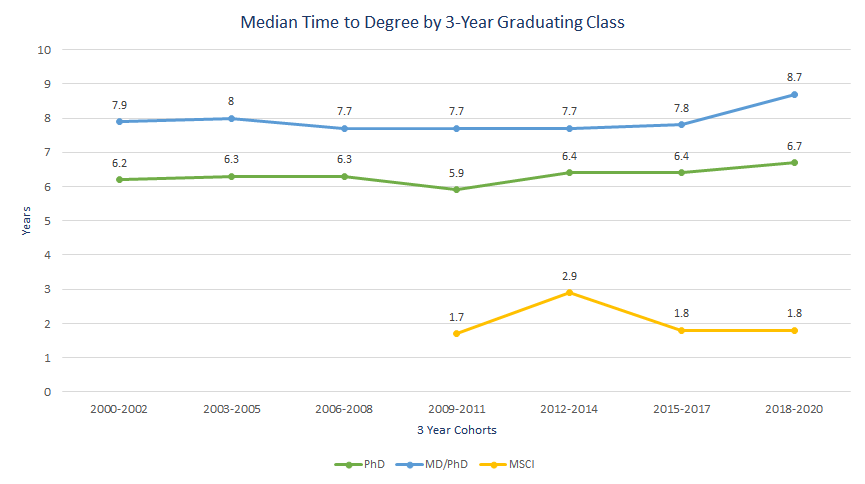
PhD Median Time to Degree 2000-2020
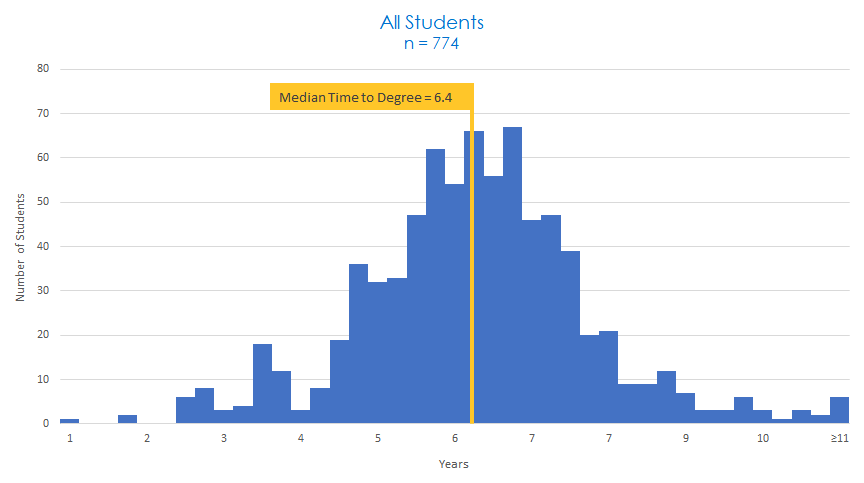
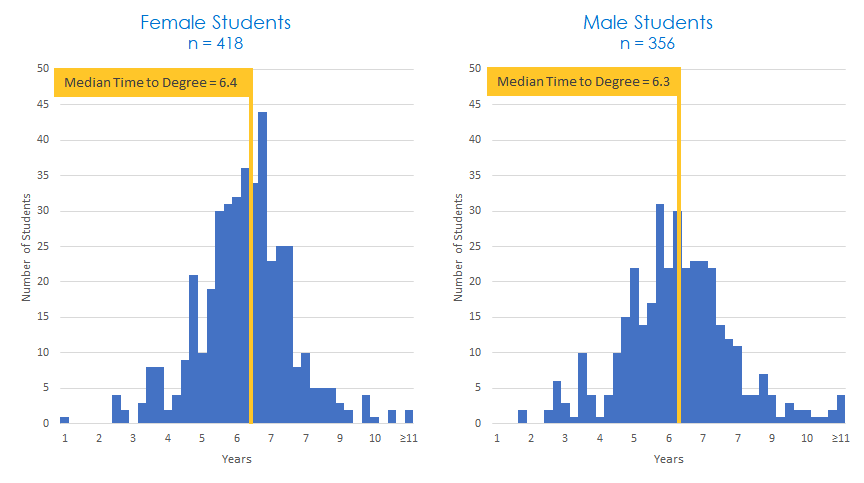
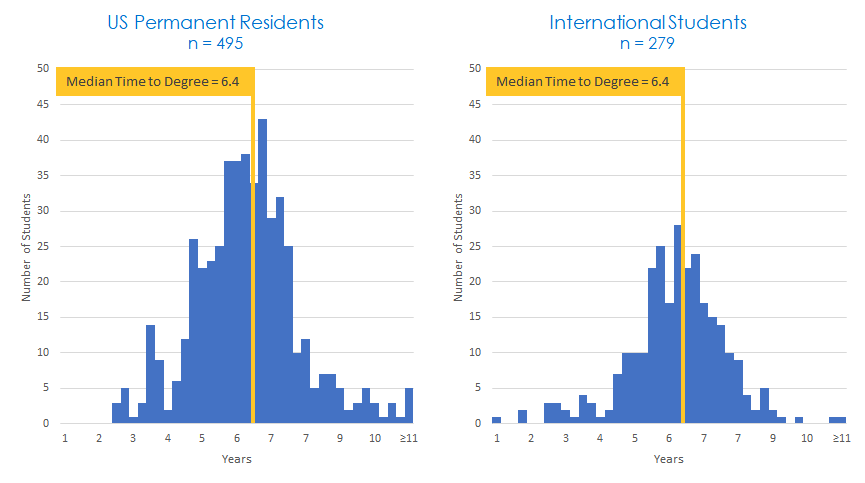
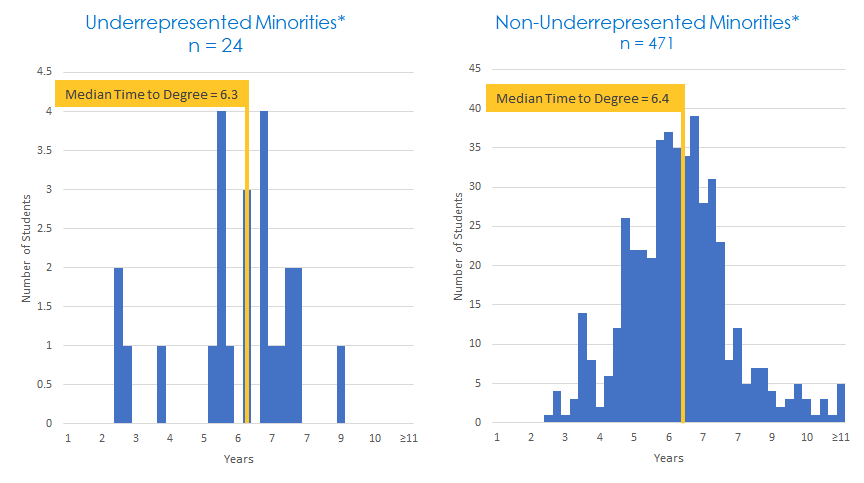
*International students are excluded from the URM data. US Citizens and Permanent Residents only.
MD/PhD Median Time to Degree 2000-2020
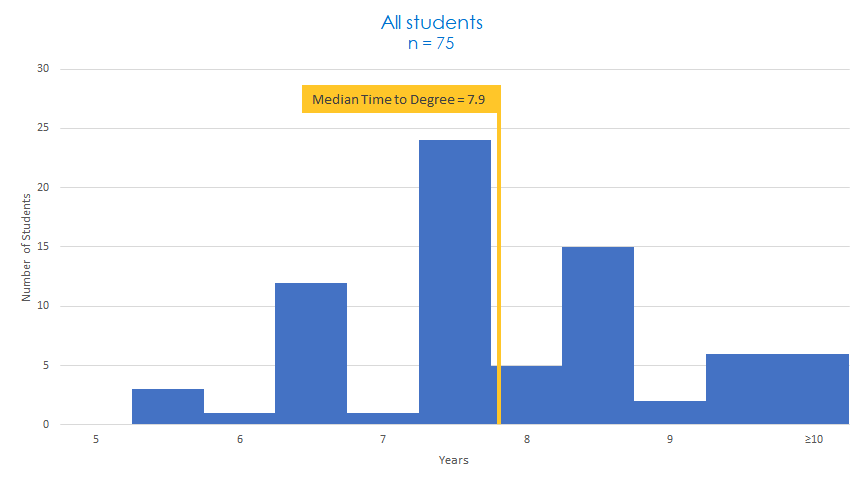
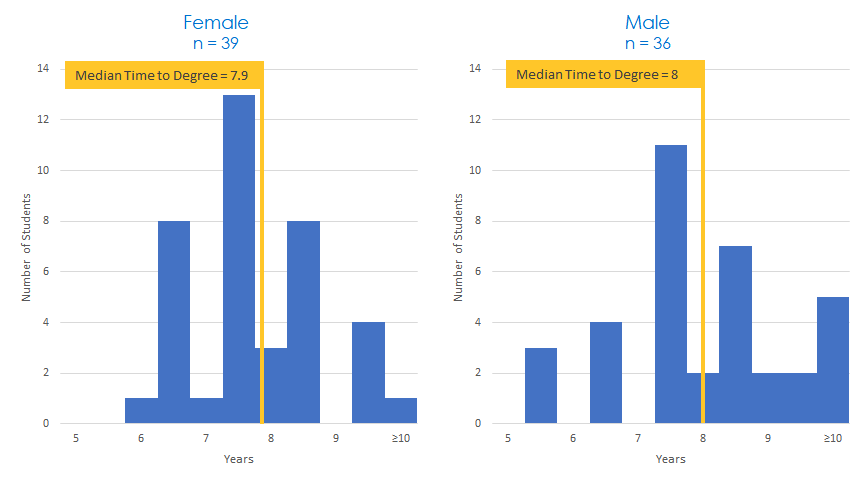
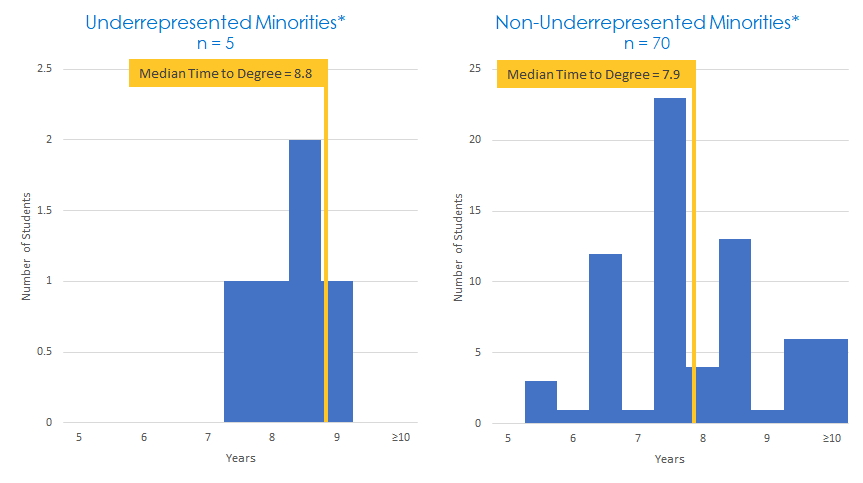
*International students are excluded from the URM data. US Citizens and Permanent Residents only.
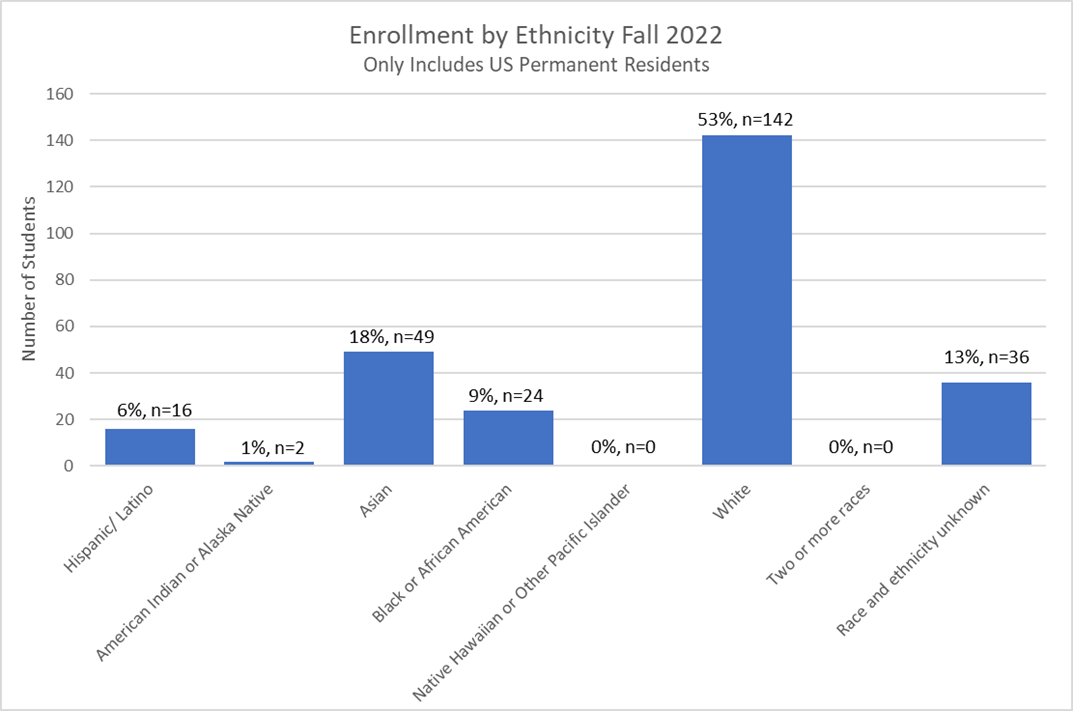
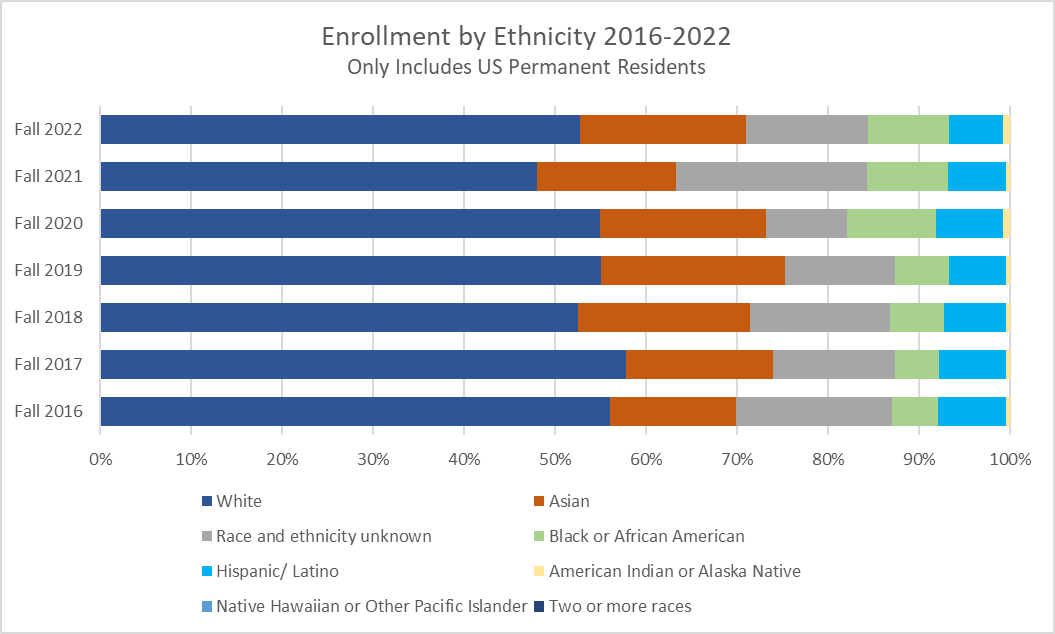
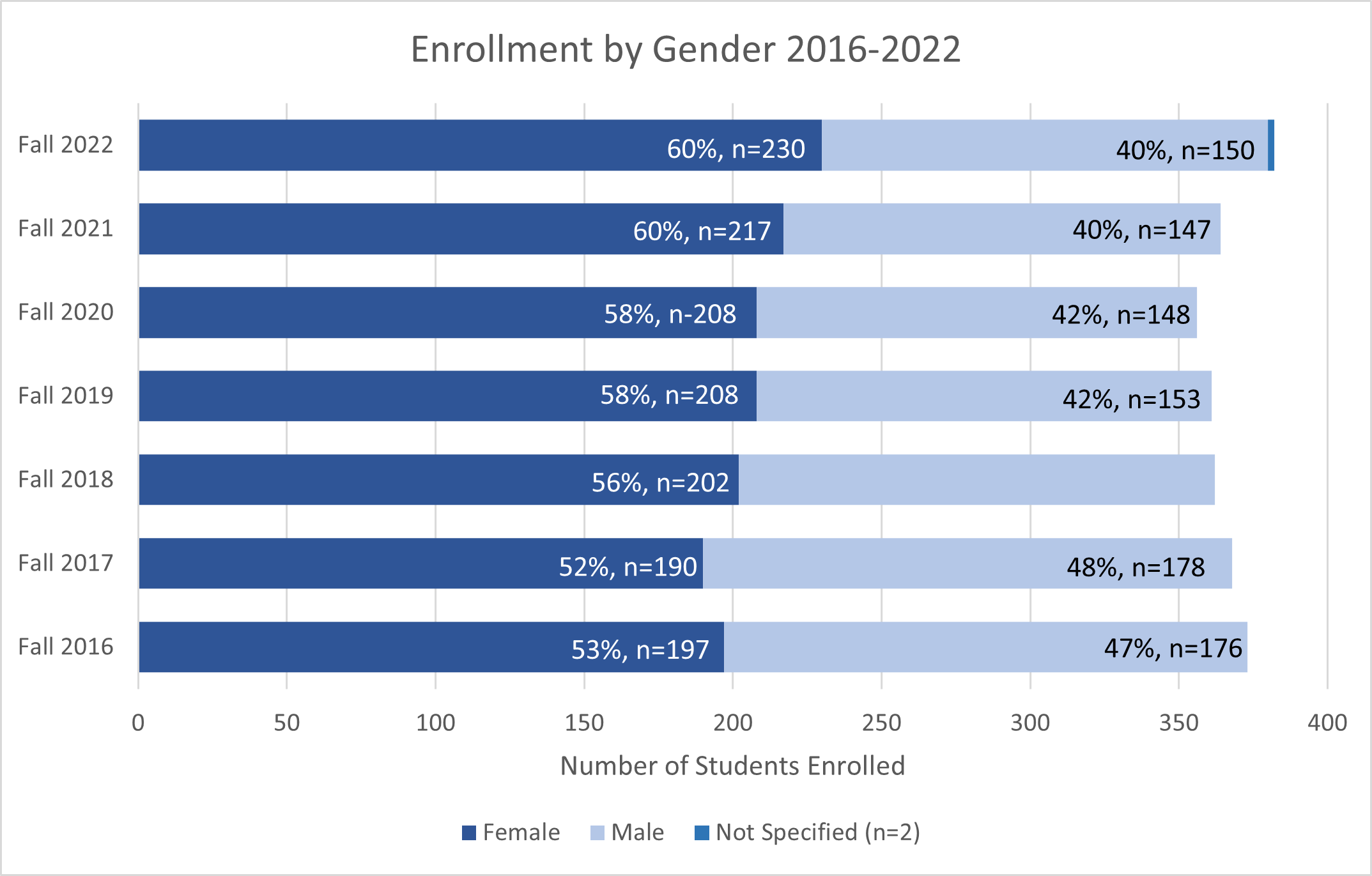
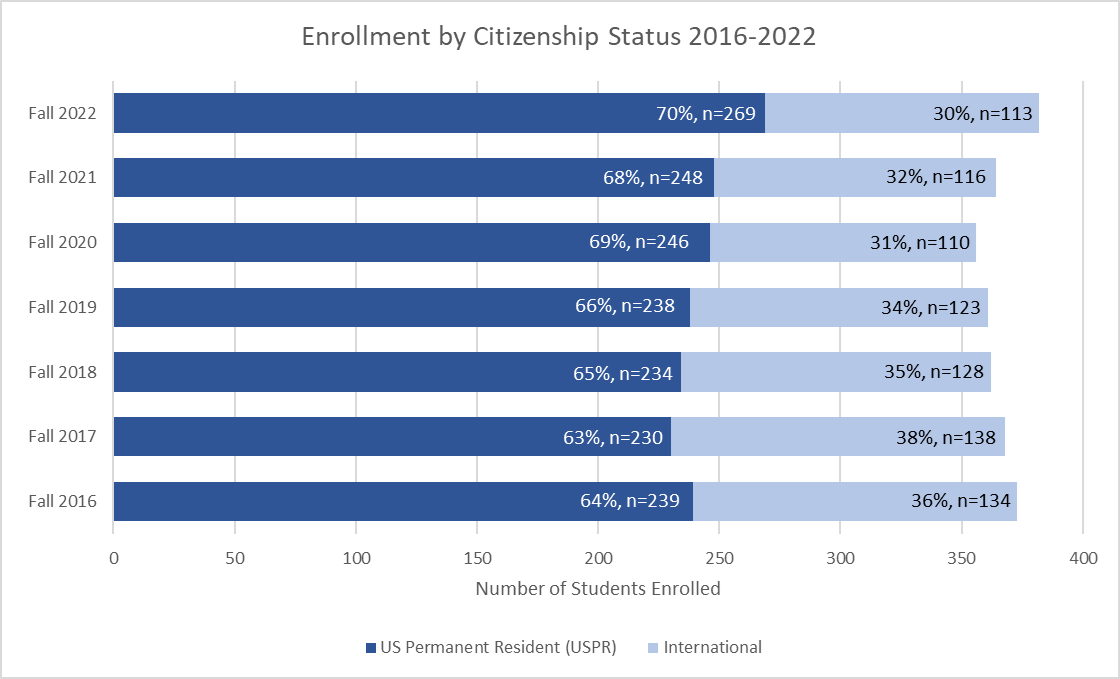
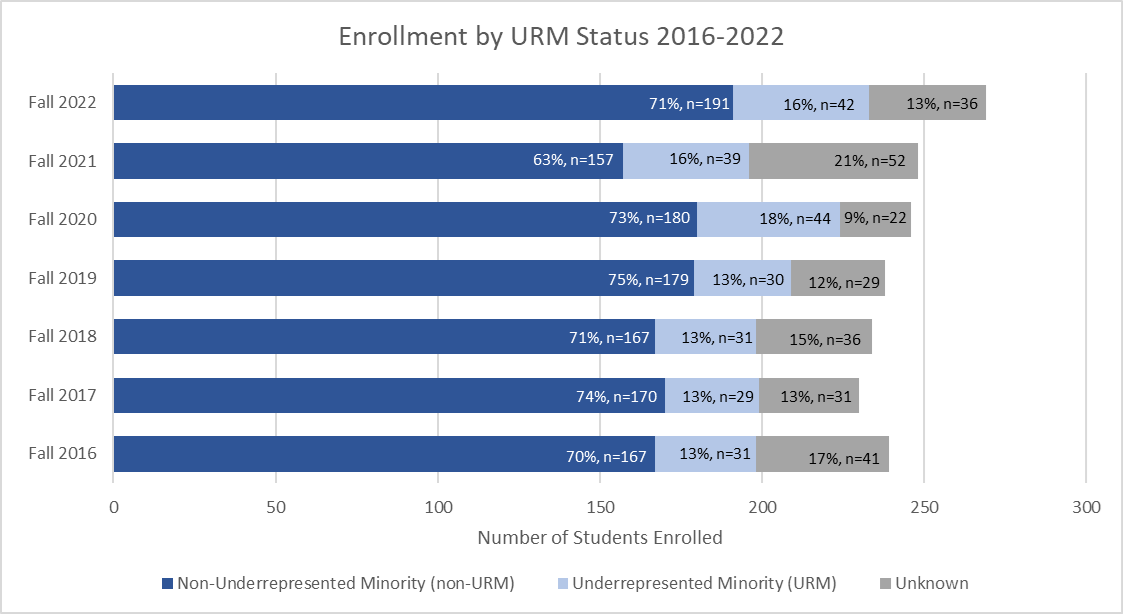
Student Body Demographics
Student Complaint Procedures
Creating a positive learning environment for every learner on the UMass Chan Medical School campus is a top priority. The UMass Chan Director for a Positive Learning Environment is dedicated to ensuring a safe, secure and positive learning environment for all learners on campus, including students from the T.H. Chan School of Medicine, Tan Chingfen Graduate School of Nursing, Morningside Graduate School of Biomedical Sciences, post-doctoral scholars and residents/fellows in Graduate Medical Education (GME) programs.
The director serves as a confidential resource for all of our learners, offering guidance and support to learners who have experienced or witnessed mistreatment, and collaborating with other university offices including, but not limited to, the Diversity and Inclusion Office (DIO), the Title IX Officer, Human Resources (HR), the Associate Deans for each School, and Student Counseling Services to further advocate for and support our learners.
You may initiate confidential contact with the Director for a Positive Learning Environment through any of these means:
- Phone: 508.856.1822
- Email: PositiveLearning@umassmed.edu
- Web form: Professional Concerns and Learner Mistreatment Incident Reporting Form
- Online: https://www.umassmed.edu/studentlife/studentresources/positive-learning/
For more information about the Appropriate Treatment of Learners policy and other reporting options please visit:
To file a complaint and or for more information about sexual assault or harassment please visit:
Withdrawal Procedures
You can review the withdrawal procedures for the Morningside Graduate School of Biomedical Sciences in the Student Handbook, sections three and four (Academic Policies and Regulations, and Academic Milestones).